Wildlife
Animal resembling a prehistoric ‘bear dog’ spotted in Africa
Footage shared from Africa appears to show an unusual animal with the powerful build and long snout associated with the long-extinct carnivores.
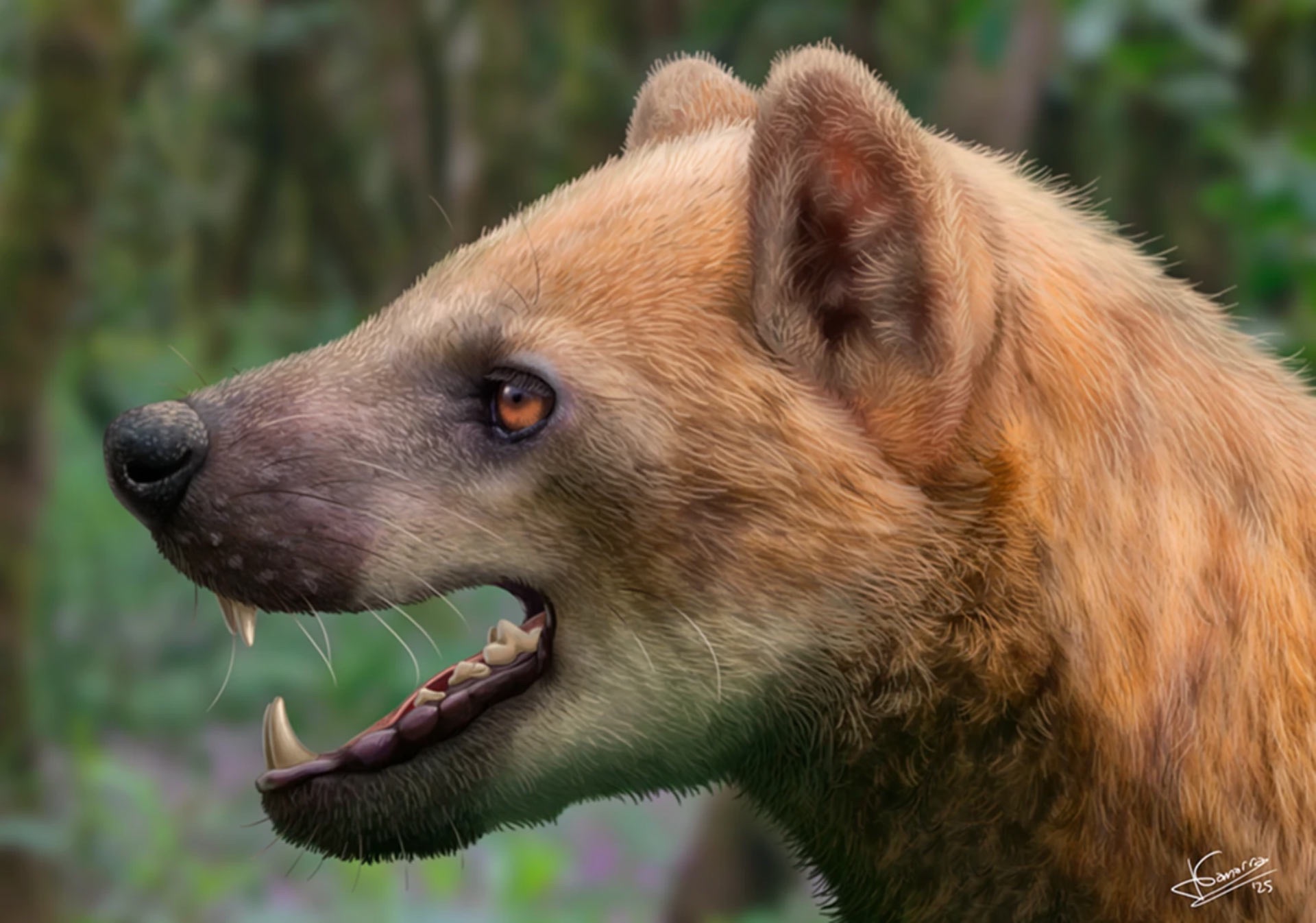
An animal resembling a prehistoric “bear dog” has been spotted in Africa, drawing attention to footage of the unfamiliar creature and questions about what species it may be.
Bear dogs, formally known as Amphicyonidae, were a diverse family of carnivorous mammals. Despite their nickname, they were neither true bears nor dogs. Different species combined features such as powerful bodies, large skulls and dog-like snouts.
The animals are known from fossils found across Africa, Eurasia and North America. They flourished for millions of years before disappearing near the end of the Miocene epoch. Researchers recently described a previously unknown species, Paludocyon moyasolai, from a fossilized skull discovered in Spain. That animal lived approximately 15.9 million years ago, according to the Institut Català de Paleontologia Miquel Crusafont.
If the animal were identified as an amphicyonid, the sighting would represent an unprecedented discovery and dramatically change scientists’ understanding of the group’s history.
Its identity has not been scientifically confirmed. Researchers would need detailed location data, additional imagery, tracks or biological samples to determine precisely what animal appears in the footage.
Wildlife experts would need clear photographs or video, measurements of tracks, biological samples and ideally observations by multiple independent teams before considering such an explanation. DNA recovered from hair, tissue or scat would offer the strongest evidence.
Africa is home to several animals that can appear unfamiliar when seen briefly, at night or in low-resolution footage. Spotted hyenas have sloping backs, powerful forequarters and broad heads. African wild dogs possess unusual coats and large ears, while feral or escaped domestic animals can display unexpected body shapes.
Even genuinely remarkable wildlife sightings frequently have less extraordinary explanations. Four endangered African wild dogs were recently confirmed in Malawi’s Kasungu National Park after more than a decade without a documented sighting there. Researchers identified the animals through photographs and an existing database, demonstrating the kind of verifiable evidence needed to confirm an unusual observation. Read the report on that confirmed sighting.
Further field investigation could establish the animal’s identity. Clear imagery and physical evidence would allow zoologists and paleontologists to assess whether the sighting documents a known African species or something genuinely unexpected.